Knowledge Repository
Explore our collection of knowledge resources and documents.
Find valuable information below.
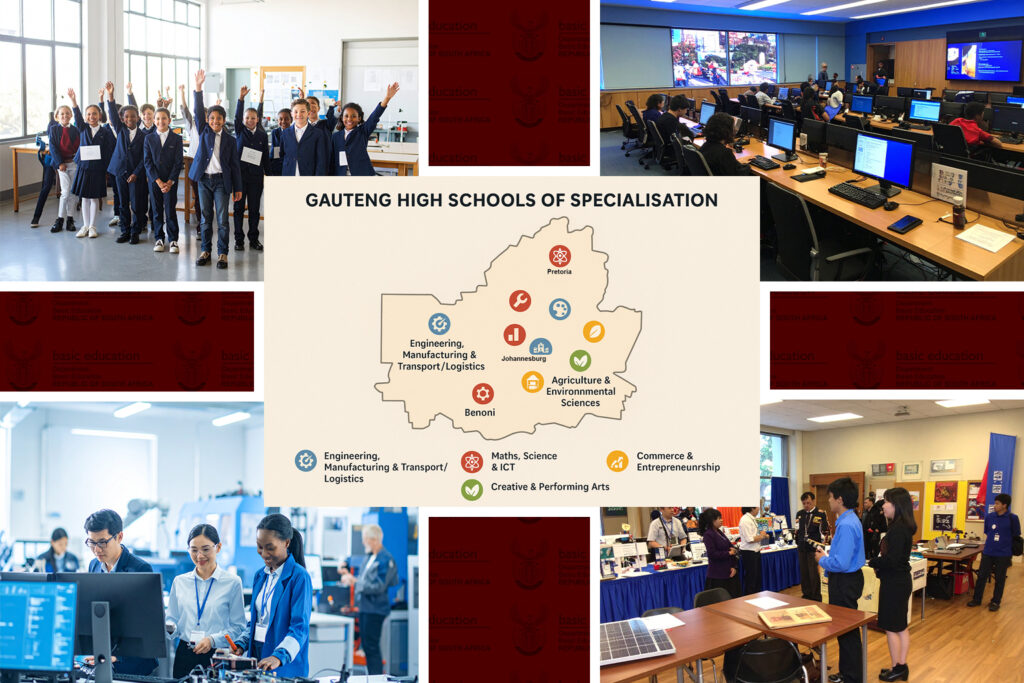
Schools of Specialisation
The Gauteng Provincial Department of Education introduced Schools of Specialisation (SOS) programme to give learners skills and exposure that will enable them to adapt and partake in the ever-changing skills economy. Gauteng Province is moving away from steel and gold as its main economic strongholds and start focusing on more current industries such as finance, pharmaceuticals, rail, ICT, sports and recreation. The aim of the SOS programme is to use ICT to hone skills in subjects such as mathematics, science, engineering, technology and agriculture that will contribute positively to the economy of Gauteng and beyond. The department hopes that by honing skills in these areas, it will be able to transform schools in Gauteng and help grow the skills base needed for economic growth. The department also believes that the industry and private partnerships are of paramount importance in addressing unemployment and skills shortages as they provide learners with workplace experience, learnership, artisanship and entrepreneurial skills.
Date: 2026/09/23
Version: 0.1
Tags:
Education Innovation
Skills Development
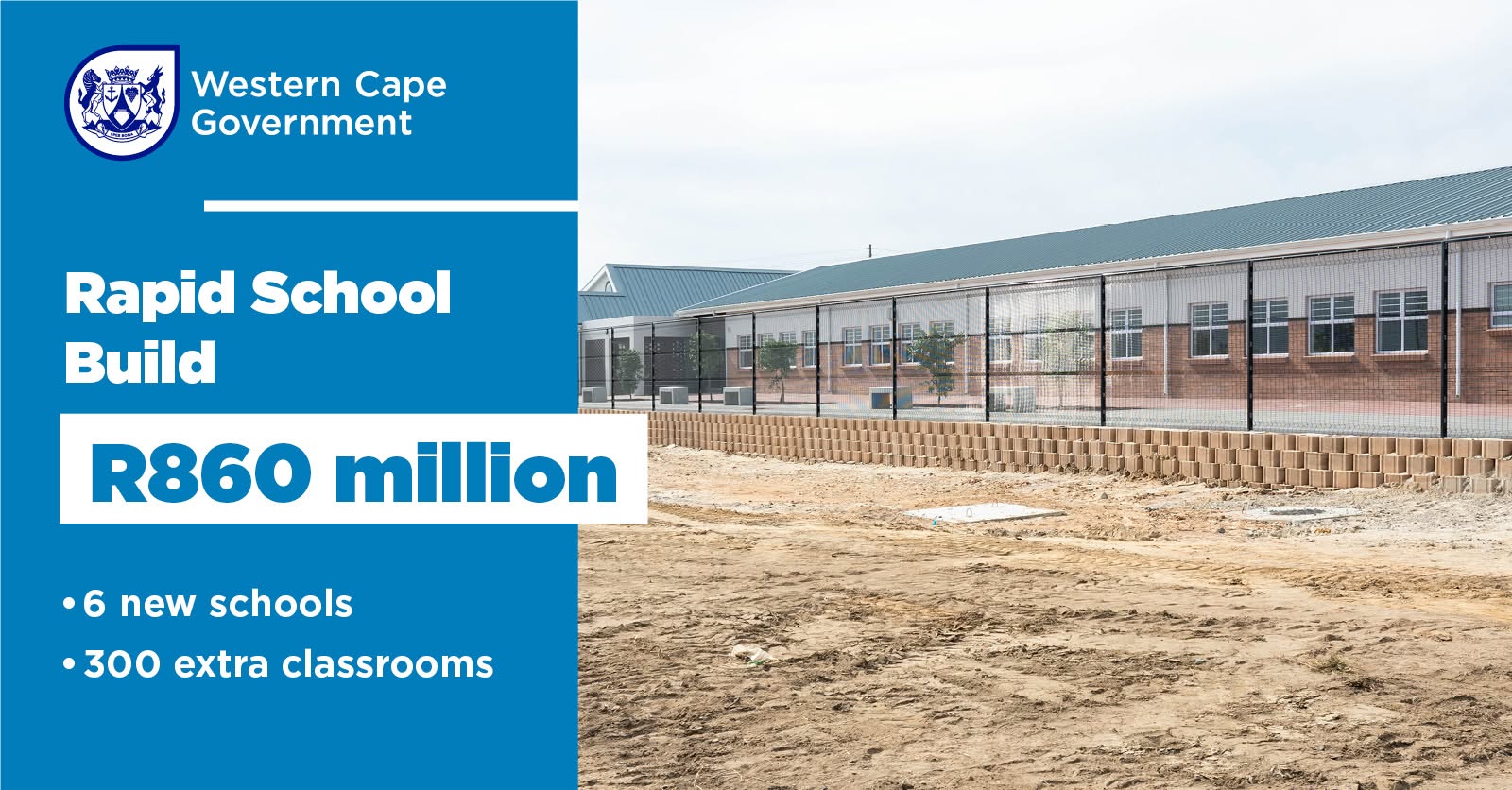
Western Cape Rapid School Build Programme
The Western Cape Education Department’s (WCED’s) Rapid School Build Programme (RSBP) is a calculated response to ever-growing demands for learner enrolment, against the backdrop of heightened demands for equitable access to quality learning and skills development opportunities. The strategic programme therefore aims to not only defuse the demands placed on the WCED for learner placement but simultaneously negate school/classroom overcrowding and expedite completion rates of learning/teaching infrastructure. Rather than being contented with meeting minimal requirements to fulfil its mandate of education provision, the WCED enterprisingly aims to modernise the education infrastructure and systems, as well as ensure the provision of adequate classrooms per grade in line with national guidelines set by the national department. The programme also aims to deliver, in partnership with the private sector schools that are fully equipped with modern education facilities needed to drive higher levels of youth engagement, improved learner retention rates, and enhance the quality and relevance of education thereby contributing to greater alignment between skills learners obtain and those demanded by labour markets or needed in the economy. The RSBP was initiated in September 2022, and since its inception has been enhanced through design and expanded consideration of partnerships.
Date: 2026/08/04
Version: 0.1
Tags:
Education Innovations
Skills Development
Sustainability
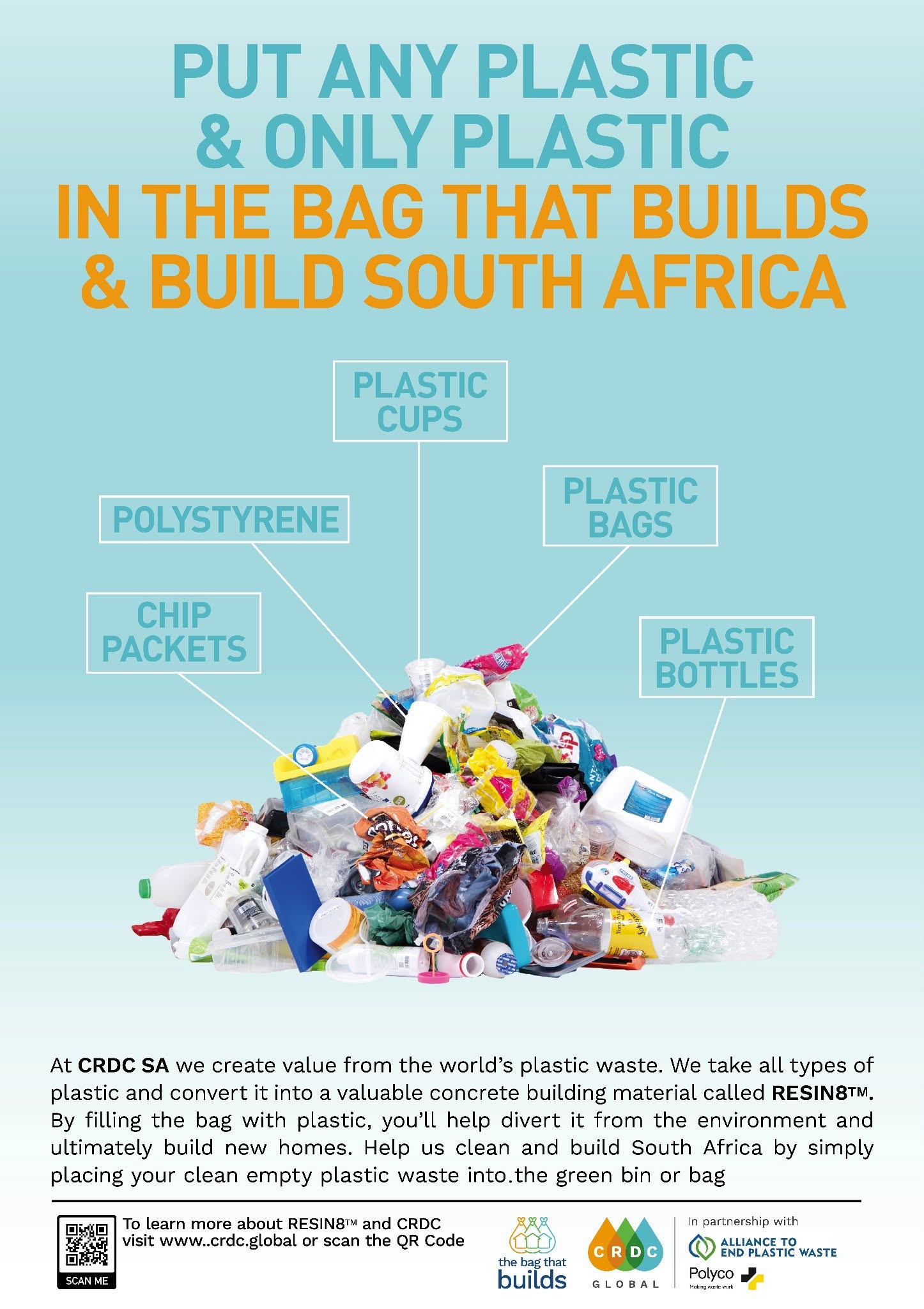
Bag that Builds Education for Sustainable Development (ESD)
The Bag that Builds ESD programme is rooted in behavioural economics and driven by schooling-related incentives. It addresses critical challenges in the public education system, particularly the alarming literacy gap, where over 80% of Grade 4 learners struggle to read for meaning. By focusing on Science, Technology, Engineering, Mathematics and the Arts (e-STEMA), the initiative cultivates proactive, entrepreneurial mindset among learners, equipping them with relevant skills for the future job market.
Date: 2026/06/29
Version: 0.1
Tags:
Education Innovations
Skills Development
Sustainability
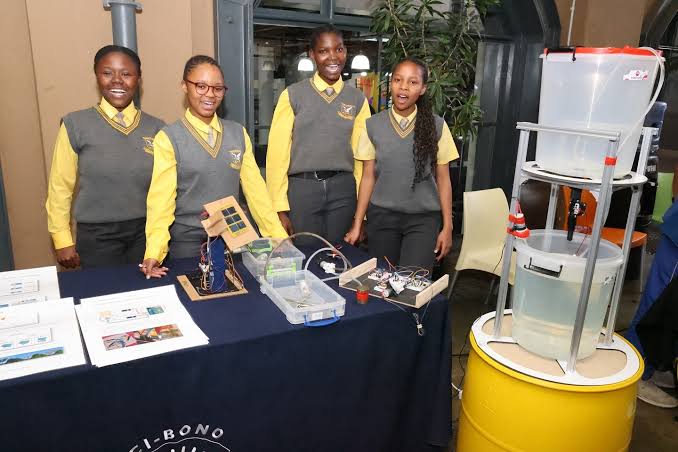
Gauteng Multi-Certification Skills Programme
The Gauteng Department of Education's Multi-Certification Skills Programme is designed to blend academic learning with practical and future focused skills. This learner-centred approach aims to produce well-rounded individuals, equipped to thrive in the 21st century. By integrating diverse skill sets into the curriculum, the programme promotes adaptability, innovation and inclusivity. Starting from Grade R, learners receive swimming lessons to establish water safety and fitness. From Grade 4 they get first aid training and begin coding and robotics education, which continues through to Grade 12. Entrepreneurship is introduced in Grade 5, while Grade 7 learners start learning sign language. Music enhancement in Grade 8 and 9 encourages creativity and Microsoft Digital Skills training from Grade 8equips learners for modern workplace. In Grade 9, learners are exposed to advanced technologies such as drone technology and Rocketry, sparking interest in STEM careers. Artificial Intelligence in introduced in Grade 12, preparing students for technology-driven futures. Overall, the Multi-Certification Programme is building a generation of competent, socially responsible and technologically adept learners.